
Medical Innovation in Surrogacy: How Are the Best Embryos Selected?
December 2025
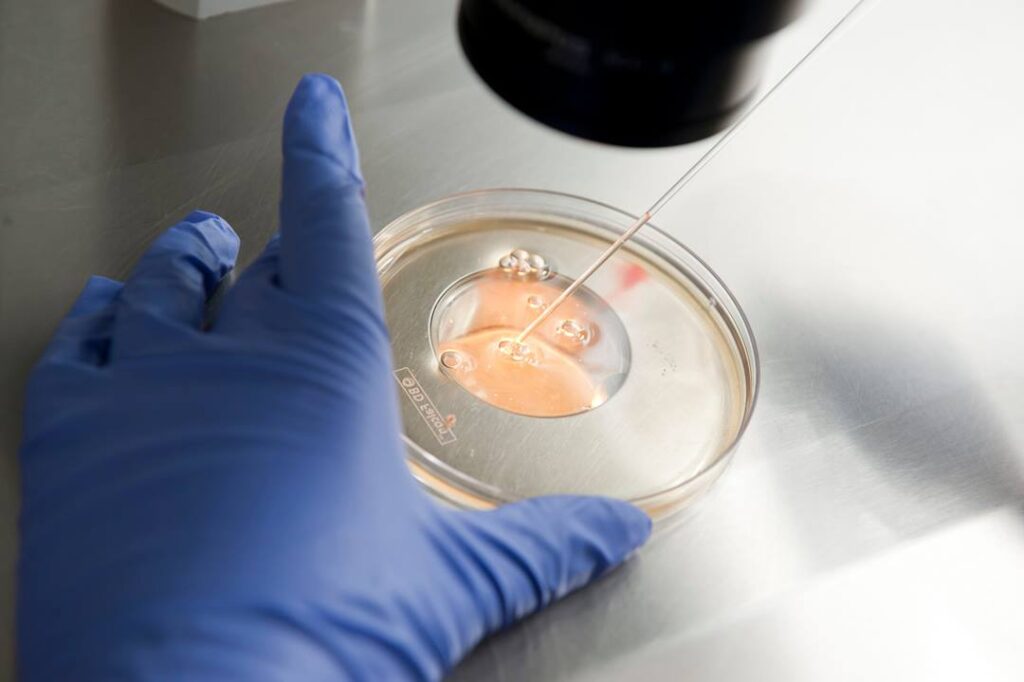
In Assisted Reproduction, scientific and technological advancements have transformed the way people can start a family. Surrogacy, in particular, has been a process that has evolved significantly thanks to innovations in reproductive medicine.
One of the most crucial aspects of surrogacy is the selection of the best embryos, a process based not only on the health of the gametes but also on advanced technologies that improve the chances of success. In this article, we will explore how embryo selection works, the most advanced technologies used at Surrogate Mexico, and how all of this contributes to making surrogacy a safer and more reliable option for those who wish to become parents.
In collaboration with Ingenes, with over 20 years of experience in the field of Assisted Reproduction, Surrogate Mexico offers prospective parents a surrogacy model that integrates the best medical, legal, and ethical practices, all under a deeply human and respectful approach.
What Is Embryo Selection and Why Is It So Important?
Embryo selection is the process by which the healthiest embryos are chosen to be transferred to the surrogate’s uterus in a surrogacy procedure. This process takes place after in vitro fertilization (IVF), where the eggs and sperm from the intended parents or donors are combined in the laboratory to form embryos.
The goal of embryo selection is to increase the chances of success in pregnancy by choosing those embryos with the highest viability and the lowest risk of genetic abnormalities. As medical technology has advanced, more sophisticated methods have been developed that not only allow the selection of embryos with higher success rates but also those with optimal genetic health.
Advanced Techniques in Embryo Selection
1. In Vitro Fertilization (IVF) and Embryo Creation
The first step in embryo selection is in vitro fertilization. In this process, eggs and sperm are collected and combined in the laboratory, where the resulting embryos are cultured and monitored for several days to observe their development.
IVF allows doctors to have direct control over embryo creation, ensuring that the gametes from the parents (or donors) are used under optimal conditions. Once the embryos are formed, the selection process begins to choose the most suitable one.
2. Preimplantation Genetic Testing (PGT-A)
One of the most significant advances in reproductive medicine is Preimplantation Genetic Testing (PGT-A). This technique allows the embryos to be tested before they are transferred to the surrogate’s uterus to detect potential genetic abnormalities.
PGT-A analyzes the number of chromosomes in the embryo to detect any genetic anomalies that may lead to miscarriage, developmental issues, or genetic diseases. This allows the selection of embryos with the best genetic profile, significantly improving pregnancy success rates.
This technology also plays a fundamental role in the prevention of hereditary diseases, especially in couples with a family history of genetic disorders. The use of PGT-A ensures that only healthy embryos are transferred, increasing the chances of success in the surrogacy treatment.
3. Cryopreservation and Frozen Embryo Selection
Cryopreservation, or embryo freezing, is another important innovation. After fertilization and initial selection, embryos can be frozen for later use. This technique offers several advantages:
- Storage of healthy embryos: embryos can be frozen and stored for future use, allowing couples to select embryos at a later time without the need for another ovarian stimulation cycle.
- Reduction of risks: embryo freezing reduces the risk of multiple pregnancies, as embryos can be transferred in a controlled manner.
- Higher success rates: the success rates of frozen embryos can be similar to fresh embryos, and the thawing process is highly effective.
Cryopreservation has been a crucial tool for those seeking to have a baby, as it offers flexibility over time and the possibility of trying multiple attempts without the need for a complete IVF cycle.
How Is the Ideal Embryo Selected for Transfer?
1. Embryo Quality Analysis
Embryo quality is a determining factor in selection. Doctors perform a detailed analysis of the embryo, observing characteristics such as its cell division rate and the symmetry of the cells. These are indicators of the embryo’s viability for a successful pregnancy.
The morphology of the embryo is also observed, evaluated with a specific scoring system. Embryos with better morphological scores generally have a higher probability of successful implantation.
2. Medical History and Genetic Factors
The medical history of the parents also plays an important role in embryo selection. If the intended parents have genetic conditions or hereditary diseases, techniques such as PGT-A allow for a more accurate and secure selection.
The genetic analysis of the embryos ensures that those with chromosomal defects or predispositions to hereditary diseases are eliminated. This maximizes the health of the baby and minimizes risks for the surrogate.
3. Ethics in Embryo Selection
One of the fundamental aspects of embryo selection is respect for ethical standards. At Surrogate Mexico, we ensure that the entire process is transparent, respectful, and conducted according to the highest legal and ethical standards. The selection of the best embryos is based not only on genetic quality but also on respect for the decisions of the intended parents.
Informed consent is a key principle, and every step of the process is designed to ensure that parents are fully informed about what is happening at all times.
What Makes Surrogate Mexico’s Embryo Selection Model Unique?
1. Surrogate Mexico as part of Grupo Ingenes
At Surrogate Mexico, our model stands out for its comprehensive approach as part of Grupo Ingenes, the largest fertility institute in Latin America. Thanks to this, we have access to the most advanced laboratories and the most innovative procedures in in vitro fertilization.
Additionally, Ingenes allows us to offer continuous support at every stage of the process, ensuring that both embryo selection and medical care are of the highest quality.
2. Comprehensive Support
It’s not just about selecting the best embryos; it’s also about supporting the intended parents at every stage. At Surrogate Mexico, we offer comprehensive support that includes emotional counseling, medical management, and legal guidance, ensuring that the entire process runs smoothly and respectfully.
Why Is Surrogacy in Mexico Attractive to International Families?
Mexico has emerged as a preferred destination for international families seeking ethical and accessible surrogacy. In addition to the high-quality medical care and legal security offered by Surrogate Mexico, families find a more personalized, transparent, and economically viable experience than in other countries.
In conclusion, medical innovation in surrogacy, backed by our partnership with Ingenes, not only allows for the selection of the best embryos but also ensures that families have a respectful, reliable, and human experience. At Surrogate Mexico, every decision made is focused on the well-being of all parties involved, making our model a clear and safe path for those looking to build a family.
A Brighter Future with Surrogate Mexico
Surrogacy continues to evolve thanks to medical advancements, and in vitro fertilization, along with advanced embryo selection, is one of the most powerful tools to make the dreams of many families come true. At Surrogate Mexico, we are committed to offering you a transparent, safe, and ethical process where the healthiest embryos are selected to ensure a successful pregnancy.With the backing of Ingenes and a model of comprehensive care, we can confidently say that your path to your baby is in the best hands.