Who is starting this journey?
LGBTQ+ families, heterosexual couples and single parents follow the same legal path in Mexico, with the same protection and the same price. What changes is the route we design with you.


The short answer

In Mexico, surrogacy is open to every type of family. The 2021 Supreme Court ruling established that access cannot be restricted by marital status, sexual orientation or nationality. That single sentence is what separates Mexico from most destinations in the world.
It matters because the alternatives are narrow. Georgia and Ukraine restrict surrogacy to married heterosexual couples. Several U.S. states prohibit it outright. In Mexico, a same-sex couple, a single parent and a heterosexual couple walk into the same program, with the same legal protection and the same price.
What changes between them is not the law. It is the medical route, the questions they arrive with and the kind of support they need. Below you will find what each path looks like in practice.
Choose your starting point
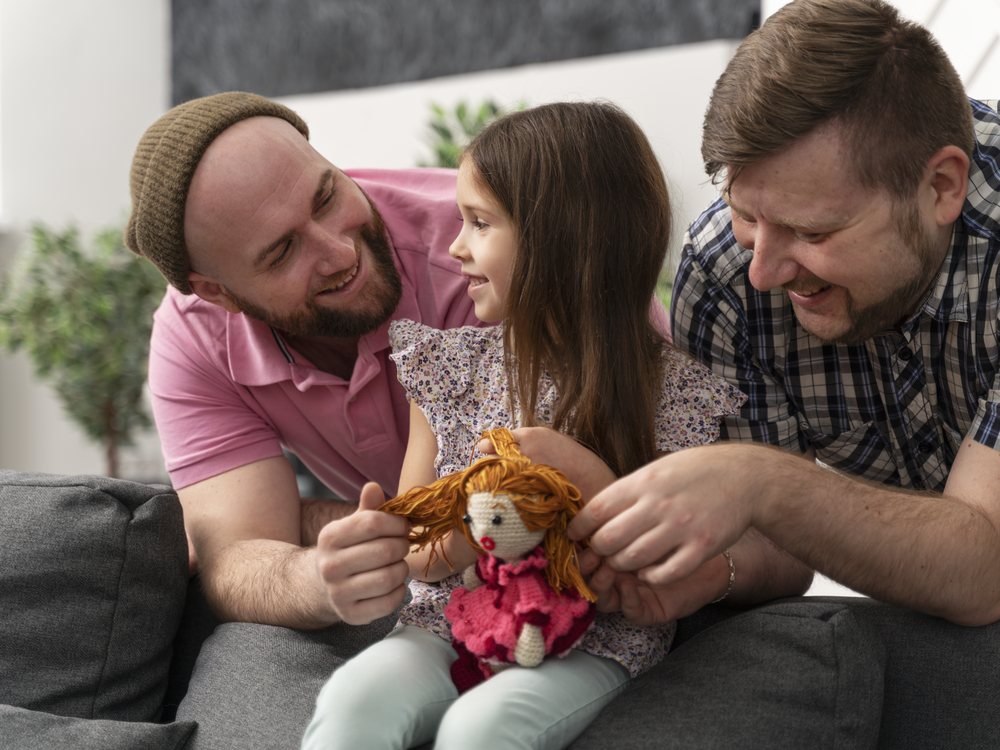
LGBTQ+ families
Most surrogacy destinations either exclude same-sex couples outright or leave them in a legal grey zone. Mexico does the opposite: the Supreme Court ruled that access cannot be restricted by sexual orientation or marital status, and that ruling is binding nationwide.
In practice this means both partners can be recognized as the legal parents and the surrogate is never listed on the birth certificate. There is no court battle afterwards to correct a document that named the wrong person.
For male couples, surrogacy is the direct route to biological fatherhood: one of you provides the sperm, a BlueDonors donor provides the eggs and a surrogate carries the pregnancy. You decide who contributes the genetic material, and some couples choose to fertilize eggs with a sample from each partner. You select 3 profiles from the donor catalog based on your preferences and your timeline, and if you already have embryos at another clinic, we coordinate their arrival through the Shipping program. For female couples, one partner’s eggs can be used while the other carries no medical risk. Your specialist confirms what is viable after the first evaluation.
We also review your country’s recognition process from the very first consultation, not after the birth, because that is where families who chose the wrong destination usually get stuck.

Heterosexual couples
Most heterosexual couples who reach us are not at the beginning of their story. They arrive after failed transfers, recurrent pregnancy loss or a uterine cause: hysterectomy, Asherman’s syndrome, uterine malformations, severe adenomyosis or repeated implantation failure with healthy embryos. We also indicate the program when pregnancy poses a real risk to her health: heart disease, kidney disease, some cancers or a history of severe preeclampsia. The exhaustion of that history is part of what we are treating.
In many cases you can use your own eggs and sperm, so the baby is genetically yours and only gestation is entrusted to someone else. When that is not viable, you choose a BlueDonors donor together, the egg bank Ingenes partners with, and if you already have embryos at another clinic, we coordinate their arrival through the Shipping program.
If previous IVF cycles failed, the medical plan changes, not your eligibility. The program includes personalized strategies for exactly that scenario: IVF MORE®, ENDOGEN and surrogate change at no cost. Every program includes up to three transfers and the egg set guarantee (if PGT-A was not performed and no embryo reached blastocyst, another set of eggs), so a single failed attempt does not end the journey or the budget.
Psychological support is part of the program, not an add-on. Couples who have already grieved several attempts do not need to perform optimism for anyone.
Single parents
Mexico sets no marital status requirement for intended parents. A single person is registered as the sole legal parent of their baby, through the same process, with the same protections and at the same price as a couple.
For single fathers, surrogacy makes biological fatherhood possible: you provide the sperm, a BlueDonors donor provides the eggs (you select 3 profiles from the catalog) and a surrogate carries the pregnancy. For single mothers, the most common reasons are a hysterectomy due to fibroids or cancer, congenital absence of the uterus (Rokitansky syndrome), uterine damage from cancer treatment or a clear medical contraindication to pregnancy: your own eggs can often be used with donor sperm, or a BlueDonors donor if your ovarian reserve no longer allows it. In both cases, if you already have embryos at another clinic, we coordinate their arrival through the Shipping program.
The practical side is where single parents usually need the most support, and it is where your Journey Coordinator matters most: one person coordinating signatures, payments and appointments with the legal, medical and financial teams, so you are not managing five providers alone from another country. Only two trips to Mexico are required, planned well in advance so you can organize work and family around them.
Nothing in this program costs more, takes longer or asks additional questions for being a single parent.

What everyone gets
Whichever door you come through, the program underneath is identical. This is what does not change.
Notarized agreements signed before the transfer, a filiación proceeding from week 12 and a birth certificate with your names on it. The surrogate is never listed as a parent.
Funds administered by a regulated banking institution and released by milestone, so you always know what has been used and what it paid for.
Treatment at Ingenes Institute, the largest fertility institute in Latin America, with the same protocols and the same specialists for every family.
A doctor for everything medical and a Journey Coordinator for signatures, payments, appointments and questions, who answer you in your language.
Major medical and life insurance, top-tier obstetric care and psychological support, regardless of who the intended parents are.
Guidance on registering your baby and obtaining their passport, adapted to your country of origin. Only two trips to Mexico are required.
FAQs
Straight answers about eligibility, genetics, cost and legal recognition.
Tell us where you are starting from and we will walk you through the path that fits your situation.